A walk-in bathtub can support a more independent bathing routine in Hagerstown when its doorway, seat, controls, and fill-and-drain process suit you. It is not automatically the right choice for every mobility need. Compare the full bathing sequence with a seated shower before choosing a system.
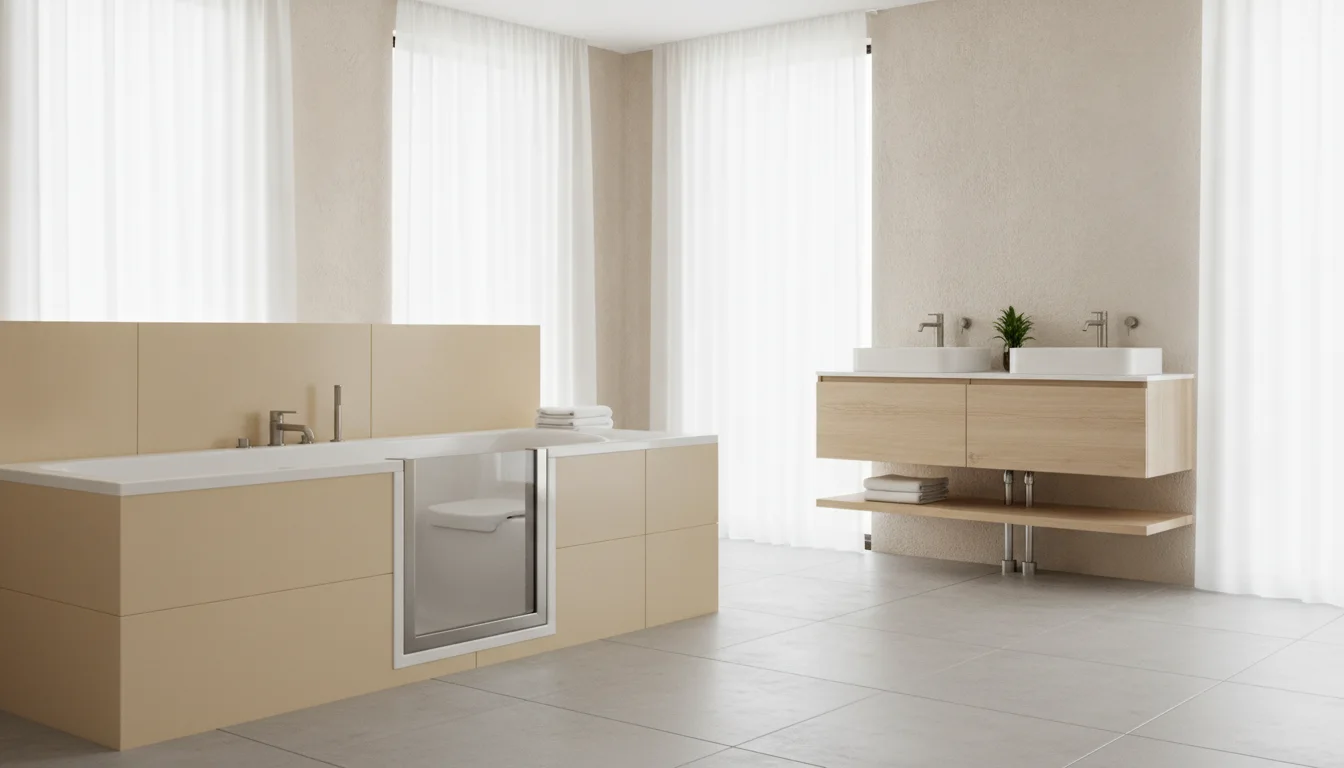
Header image: AI-generated design inspiration, not a completed customer project.
Try the entry and seating sequence
Open the door, step through the entrance, turn, and sit in a display model if possible. Check whether your legs and feet fit comfortably and whether you can operate the door latch. Think about how you would perform the same movements on a difficult day.
Discuss any mobility aid or assistance you use. An inward-opening door and an outward-opening door create different space requirements. The surrounding bathroom must provide enough room for the actual approach, not just the installed tub.
- Try the door, turn, seating position, and control reach.
- Check hot-water supply against the chosen model.
- Compare soaking with a seated shower before committing.
Understand the waiting time inside the tub
A conventional walk-in tub requires its door to remain closed while water reaches the door opening. You generally enter before filling and wait for water to drain before leaving. Ask the manufacturer and installer about the operating process for your exact model.
Check hot-water capacity and ask how the proposed plumbing affects fill and drain performance. Do not assume a model's advertised performance describes every home. Include comfort during filling and draining in your product comparison.
| Option | Potential fit | What to verify |
|---|---|---|
| Inward-opening door | A layout suited to its operating movement | Interior clearance and user reach |
| Outward-opening door | A layout with suitable external space | Bathroom clearance and model-specific operation |
| Seated shower alternative | A routine centered on showering | Seat support, entry, and spray control |
Keep service and cleaning accessible
Ask how you will clean the seat, door seal, and any bathing system. Discuss which components require periodic care and where service panels will remain accessible. Choose features whose maintenance you can manage or arrange.
Compare a walk-in tub with a shower that provides seating and reachable controls. Independence comes from matching the design to your needs, not from the product label. An occupational therapist can help evaluate complex mobility requirements before you commit.
Compare the installed system and its operating routine
Request the model’s installation and operating documents before approving the order. Confirm the entry direction, seat dimensions, control locations, plumbing requirements, and any powered features. Ask how the installer will preserve service access. A clear proposal should also explain surrounding wall finishes and the plan for removing the existing fixture, so you can compare the complete project rather than a tub-only price.
Bring a clear brief to your consultation
For your Hagerstown, MD project, bring photographs of the existing room, a list of the problems you want to solve, and examples of finishes you like. Ask Clear Day Bath Solutions to review the proposed scope against the room’s actual conditions. Explain any timing constraints and which other bathroom facilities you can use while work takes place.
Before approving an order, check that the proposal reflects your selections and practical priorities. Ask for clarification wherever a product, preparation step, or finishing detail remains unspecified. Keep the final scope and any later changes together so the installation team and your household work from the same plan.
- Confirm included work and exclusions.
- Ask about product availability and first use.
- Keep the installation and care documents.
Plan your next step with Clear Day Bath Solutions
Discuss your plans for walk-in bathtubs with Clear Day Bath Solutions and ask for a scope that fits your home and routine. Request your consultation.
Frequently Asked Questions
Do I enter before filling the tub?
That is the usual routine for conventional walk-in tubs. Follow the exact model’s instructions for filling, draining, and opening the door.
Will my existing water heater be sufficient?
The installer needs to compare the tub’s requirements with your hot-water system. Do not assume every model will work equally well with the existing supply.
Does a walk-in tub eliminate all access difficulties?
No, the entry, turning motion, seating position, and waiting period must suit the user. Evaluate the full routine rather than the entrance alone.
Can the tub include jets?
Some models include powered bathing features. Confirm electrical, cleaning, and service-access requirements before selecting them.
Is a walk-in tub better than a seated shower?
The answer depends on your preferences, movements, and available space. Compare both routines and involve an occupational therapist if your needs are complex.
What should the installation quote include?
Ask for the tub model, removal, plumbing, required electrical work, surrounding finishes, and service access. Clarify how concealed damage and other changes will be handled.
Further reading: U.S. Consumer Product Safety Commission home safety checklist.