A stylish bath surround should protect the wet area, suit your Northern Virginia bathroom, and remain manageable to clean. Start with the wall system and installation details, then select the pattern. The surface you see cannot compensate for an unsuitable wall or a poorly finished tub-to-wall connection.
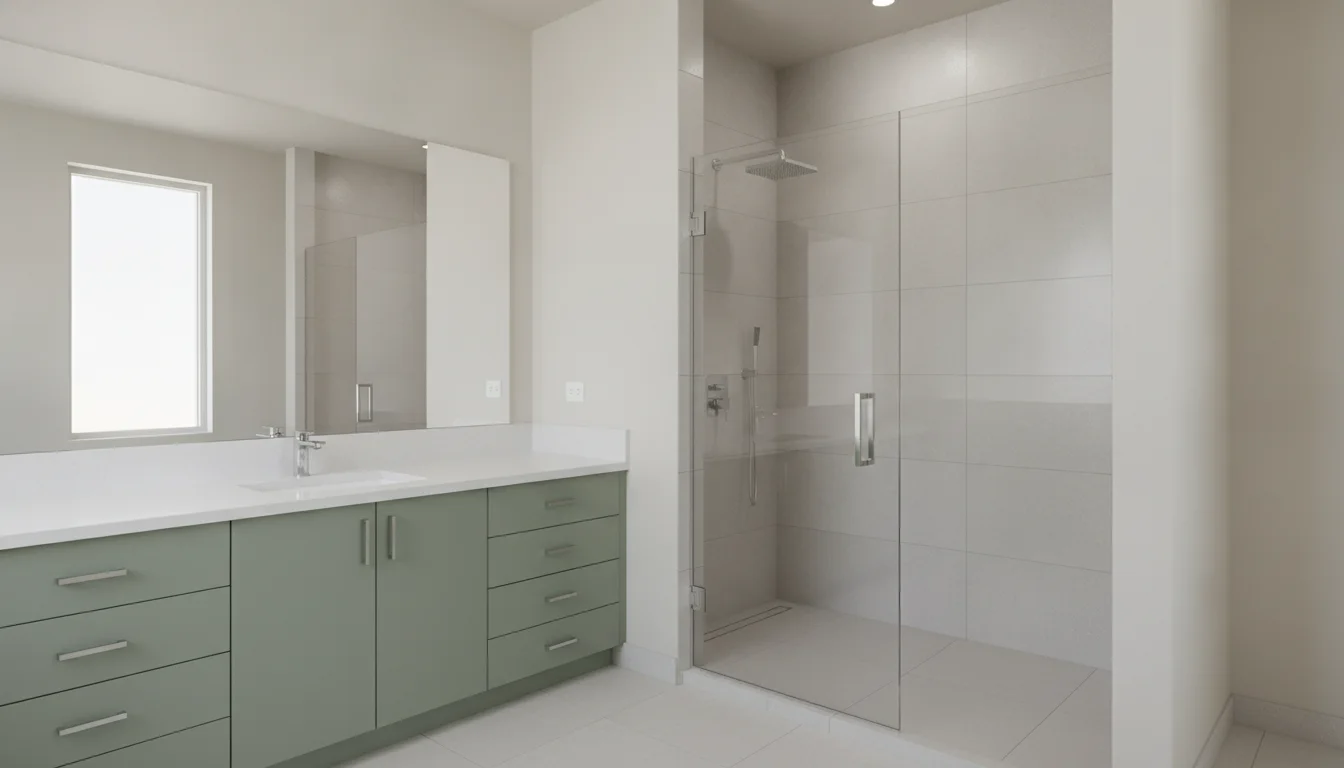
Header image: AI-generated design inspiration, not a completed customer project.
Use the room's existing finishes as a starting point
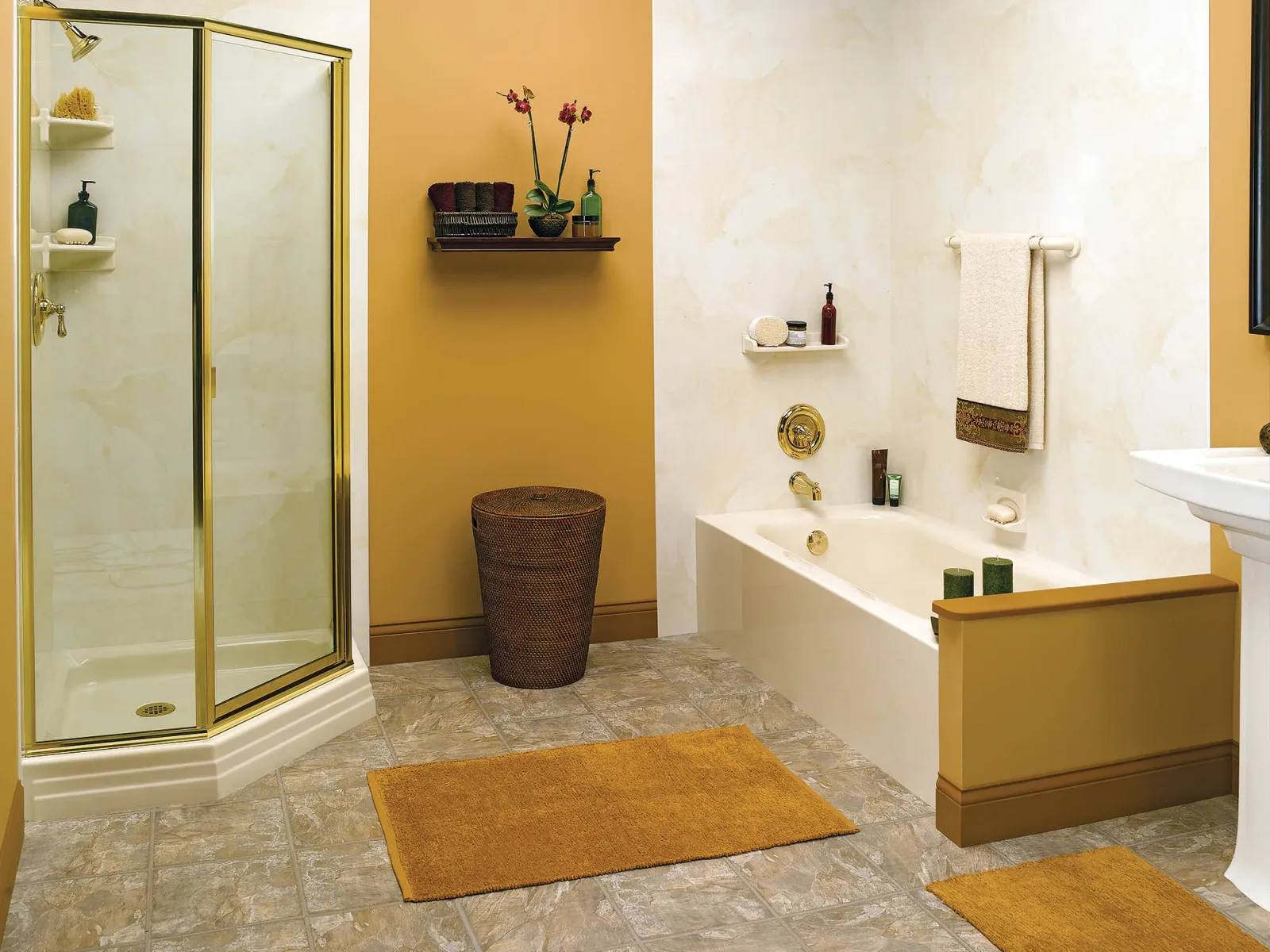
Bring samples or clear daylight photographs of the vanity, flooring, and fixtures when choosing a surround. A warm white panel may look different beside cool gray tile than it does in a showroom. Compare full-size samples where possible rather than relying on a small screen image.
Choose one principal visual feature. Strong stone-like veining, a contrasting niche, and multiple hardware finishes can compete in a small room. A quieter wall pattern often leaves more flexibility when you later replace towels, paint, or lighting.
- Compare physical samples under your bathroom lighting.
- Locate shelves and fittings before wall installation.
- Ask about cleaning restrictions and repair options.
Look closely at corners and accessory details
Ask where panel joints will fall and how the installer will finish corners, openings, and outside edges. Large panels can reduce the number of joints, but the remaining joints still require the manufacturer's specified treatment. A surround is a complete installed system, not merely a sheet material.
Plan shelves, niches, and support bars before wall installation. Each opening or attachment changes the installation detail. Keep everyday bottles reachable and check that the chosen accessories do not crowd your standing or bathing position.
| Option | Potential fit | What to verify |
|---|---|---|
| Large wall panels | A design with fewer visible divisions | Panel fit and specified joint treatment |
| Textured panel finish | Visual detail in a coordinated system | Texture cleaning and pattern alignment |
| Tile installation | Flexible individual-unit layouts | Substrate, waterproofing, and grout care |
Choose a finish you can maintain
Compare the manufacturer's cleaning instructions for every shortlisted product. A surface marketed as easy care still needs routine cleaning, and incompatible abrasive products can damage a finish. Ask about repairs and replacement components as well as the initial appearance.
Have the estimate explain what happens to the existing walls. Covering an old surface without understanding its condition can hide a problem. Your contractor should identify the preparation method and explain how unexpected moisture damage will affect the work.
Ask for the installation detail, not just a sample
A sample shows the finish, but your contractor should also explain the substrate, joining method, corners, and connection to the tub or shower base. Confirm how the system handles accessories and plumbing openings. Keep the manufacturer’s instructions with your project records, and ask which joints need ongoing inspection. These practical details help you understand the work hidden behind the finished appearance.
Bring a clear brief to your consultation
For your Northern Virginia project, bring photographs of the existing room, a list of the problems you want to solve, and examples of finishes you like. Ask Clear Day Bath Solutions to review the proposed scope against the room’s actual conditions. Explain any timing constraints and which other bathroom facilities you can use while work takes place.
Before approving an order, check that the proposal reflects your selections and practical priorities. Ask for clarification wherever a product, preparation step, or finishing detail remains unspecified. Keep the final scope and any later changes together so the installation team and your household work from the same plan.
- Confirm included work and exclusions.
- Ask about product availability and first use.
- Keep the installation and care documents.
Plan your next step with Clear Day Bath Solutions
Discuss your plans for bath surrounds with Clear Day Bath Solutions and ask for a scope that fits your home and routine. Request your consultation.
Frequently Asked Questions
Can new panels cover damaged walls?
A new finish should not conceal an unresolved moisture or structural problem. Have the contractor assess the existing condition and the selected system’s preparation requirements.
Are fewer seams the same as no maintenance?
No, the remaining joints and fittings still require appropriate care. Follow the manufacturer’s inspection and cleaning guidance.
Can I add a niche to any wall system?
Compatibility depends on the products and installation details. Plan niches before ordering and ask how the opening will maintain the water-management system.
Do all acrylic products have identical properties?
No, construction, finish, and installation requirements differ. Compare the documentation for the exact products you are considering.
What cleaners should I use?
Use products and tools allowed by the manufacturer. Avoid assuming a cleaner suitable for the old shower is also suitable for the new surface.
What should the estimate describe?
It should identify removal, preparation, panels or other finishes, joints, accessories, and surrounding transitions. Ask how the contractor will price unexpected repairs.
Further reading: U.S. Consumer Product Safety Commission home safety checklist.