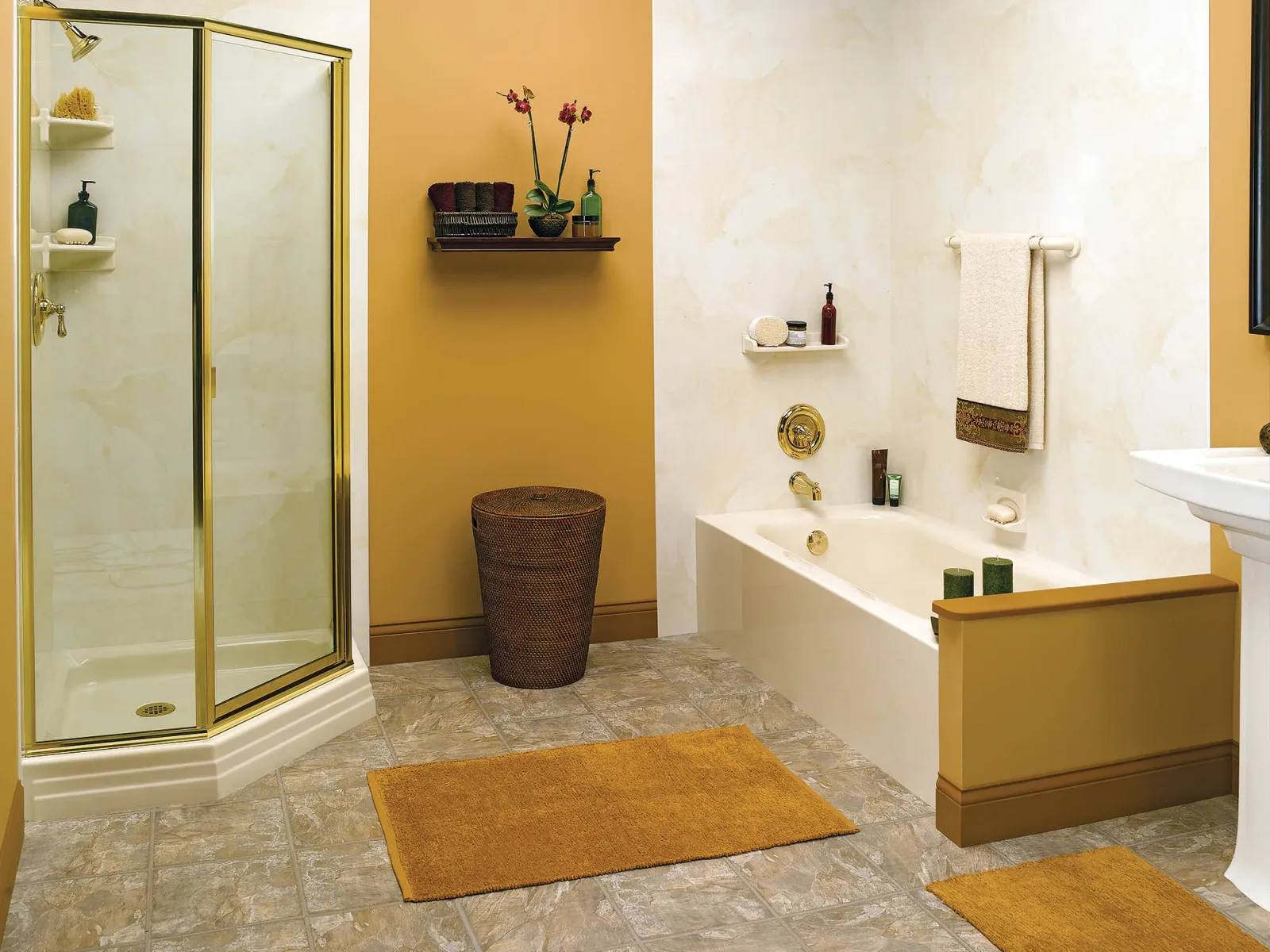
For a Manassas homeowner considering a walk-in bathtub, the key question is whether it makes the entire bathing routine easier. A lower entrance and built-in seat may help, but doorway movement, filling, draining, and cleaning also matter. Evaluate those steps before deciding to replace your existing bath.
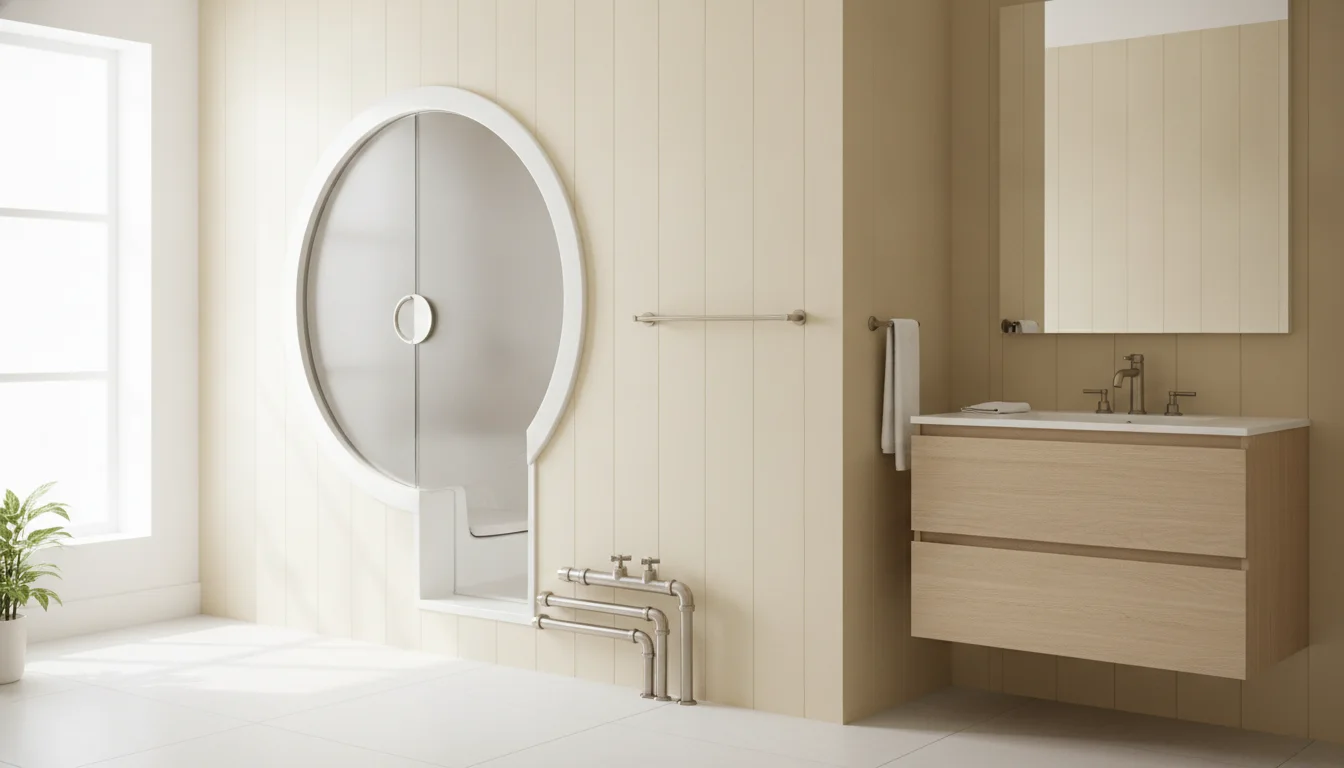
Header image: AI-generated design inspiration, not a completed customer project.
Evaluate movement rather than marketing labels
Practice entering a display model, closing the door, sitting, and reaching the controls. Consider your balance and flexibility on a typical day. Ask a family member or care professional to help identify movements that could still present difficulty.
The bathroom approach matters too. Check whether the door, toilet, or vanity limits your route to the tub. If you use a mobility aid, include it when reviewing clearances rather than assessing the tub in isolation.
- Try the door, turn, seating position, and control reach.
- Check hot-water supply against the chosen model.
- Compare soaking with a seated shower before committing.
Understand the tradeoff between soaking and entry
A walk-in tub can preserve seated soaking, but you normally enter before filling and remain inside until water drains below the door opening. Ask about that sequence for the exact model. Compare it with a seated shower if waiting inside the tub would be uncomfortable.
Have the installer check hot-water supply and the manufacturer's plumbing requirements. Additional features can affect power and service-access needs. Make sure the estimate includes those requirements instead of just the tub unit.
| Option | Potential fit | What to verify |
|---|---|---|
| Inward-opening door | A layout suited to its operating movement | Interior clearance and user reach |
| Outward-opening door | A layout with suitable external space | Bathroom clearance and model-specific operation |
| Seated shower alternative | A routine centered on showering | Seat support, entry, and spray control |
Plan support beyond the tub itself
Reachable towels, suitable lighting, and a clear floor contribute to the overall result. Discuss support-bar locations and appropriate reinforcement. Do not assume an attractive handle is designed to support your body weight.
Ask for product operation and cleaning instructions during the consultation. If you have complex mobility needs, involve an occupational therapist before ordering. The best upgrade is the one that fits your movements, home, and available assistance.
Write down a normal bathing sequence and walk through it with the person who will use the tub. Include managing a towel, operating a hand shower, and reaching anything dropped near the seat. Discuss how the bathroom would accommodate help without blocking the doorway. If a display model feels difficult to use while dry and fully clothed, investigate that difficulty before assuming the installed version will solve it. Ask the installer to distinguish product features from site-specific adaptations in the estimate. A support bar, a change to the surrounding floor, or a different doorway may involve separate work. Review those items together so the project does not improve the basin while leaving the approach inconvenient. Take time to compare an alternative seated shower plan with the same level of detail. You can then choose based on the routine you prefer rather than the urgency of a sales offer.
Compare the installed system and its operating routine
Request the model’s installation and operating documents before approving the order. Confirm the entry direction, seat dimensions, control locations, plumbing requirements, and any powered features. Ask how the installer will preserve service access. A clear proposal should also explain surrounding wall finishes and the plan for removing the existing fixture, so you can compare the complete project rather than a tub-only price.
Bring a clear brief to your consultation
For your Manassas, VA project, bring photographs of the existing room, a list of the problems you want to solve, and examples of finishes you like. Ask Clear Day Bath Solutions to review the proposed scope against the room’s actual conditions. Explain any timing constraints and which other bathroom facilities you can use while work takes place.
Before approving an order, check that the proposal reflects your selections and practical priorities. Ask for clarification wherever a product, preparation step, or finishing detail remains unspecified. Keep the final scope and any later changes together so the installation team and your household work from the same plan.
- Confirm included work and exclusions.
- Ask about product availability and first use.
- Keep the installation and care documents.
Plan your next step with Clear Day Bath Solutions
Discuss your plans for walk-in bathtubs with Clear Day Bath Solutions and ask for a scope that fits your home and routine. Request your consultation.
Frequently Asked Questions
Do I enter before filling the tub?
That is the usual routine for conventional walk-in tubs. Follow the exact model’s instructions for filling, draining, and opening the door.
Will my existing water heater be sufficient?
The installer needs to compare the tub’s requirements with your hot-water system. Do not assume every model will work equally well with the existing supply.
Does a walk-in tub eliminate all access difficulties?
No, the entry, turning motion, seating position, and waiting period must suit the user. Evaluate the full routine rather than the entrance alone.
Can the tub include jets?
Some models include powered bathing features. Confirm electrical, cleaning, and service-access requirements before selecting them.
Is a walk-in tub better than a seated shower?
The answer depends on your preferences, movements, and available space. Compare both routines and involve an occupational therapist if your needs are complex.
What should the installation quote include?
Ask for the tub model, removal, plumbing, required electrical work, surrounding finishes, and service access. Clarify how concealed damage and other changes will be handled.
Further reading: U.S. Consumer Product Safety Commission home safety checklist.